Alabama DUI Attorneys
The Polson Law Firm
The Polson Law Firm




By: Mark Polson, Veteran Birmingham DUI Attorney and Martindale-Hubbell Gold Champion Award Winner
Alabama's DUI law spells out more than one way to charge a driver. A conviction can bring jail time, a stiff fine, the loss of your license, and an ignition interlock device on your car. This page answers the question most drivers ask first: what is the legal limit for alcohol in Alabama?
It also covers the limit that applies to each kind of driver. And it shows how the state proves a case of driving under the influence of alcohol, what a first charge brings, and what each later charge adds on top.
No two arrests are alike. The facts drive the result. If you have been charged, call an Alabama DUI attorney right away. You need to know your rights and your choices.
Alabama prosecutors can go after a drunk driving conviction in two ways. They often charge both at once, in the alternative. The gap between the two matters, because the proof each one calls for is not the same.
The first way is the impairment prong. A driver breaks the law by operating a vehicle while under the influence of alcohol, a controlled substance, or any substance that impairs mental or physical faculties. For a controlled substance or other impairing substance, the driver must also be rendered incapable of driving safely.
Here the proof is indirect. What the officer saw is what counts. That means the driving pattern, slurred speech, the smell of alcohol, an unsteady walk, red eyes, and how the driver did on field sobriety tests.
A police witness may also speak to impairment based on horizontal gaze nystagmus test results. This way of charging needs no test number at all. A driver who blows below 0.08% can still be convicted if the evidence shows impairment.
The second way is the per se prong. Driving with a blood alcohol level of 0.08% or more is against the law. So is being in actual physical control of a vehicle at that level.
The state does not have to show one sign of impairment. A test result at or above the limit is enough on its own. The limit is not the same for every driver, as the next part shows.
Because the state can lean on either way – or on both – a driver may be found guilty even when the proof on one prong is thin. The next part breaks down just where the legal limit falls for each kind of driver in Alabama.

The legal alcohol limit Alabama sets for you turns on your age and on what you drive. For most adult drivers, the legal alcohol limit in Alabama is a blood alcohol level, or BAC, of 0.08%.
State law then draws other lines for other drivers:
One more BAC limit matters. Alabama adds enhanced penalties when a driver's BAC reaches 0.15% or higher. Lawyers often call that a "super DUI". It pushes the sentence up. Learn more about enhanced penalties for a super DUI in Alabama.
One point is easy to miss. Staying below the limit does not keep a charge off the table. A driver with a BAC of 0.06% could still be convicted under the impairment prong if the prosecution presents enough evidence of unsafe driving.
A BAC between 0.05% and 0.08% does not create any presumption either way. The jury may weigh it with the rest of the proof. On the right facts, a charge may still go ahead. So anyone arrested for DUI in Alabama should talk to an attorney, whatever the test said.
These two ways of charging shape every DUI defense in Alabama.
In a per se DUI, the state's case rests on the chemical test. If the BAC result meets or tops the limit set for that driver, the state can win without proving impairment.
So the defense in a per se case goes at the test itself. Was the machine set up and checked the right way? Did the officer follow approved methods? Was the sample taken in a lawful way? These questions can decide the case.
In an impairment-based DUI, the prosecution must prove the driver was under the influence of alcohol, or was under the influence of another substance to a degree that rendered the driver incapable of driving safely.
That case leans on what the officer says, on dash or body camera video, and on how the driver did on field sobriety tests. Much of that proof is a judgment call. A skilled defense attorney can test it on cross-examination.
Prosecutors in Alabama often charge both ways at once. A jury could then convict on either prong. A strong defense weighs the proof behind each one on its own, then goes after the weak spots in the state's case.

Alabama's DUI law covers far more than drink. A driver may be charged for being at the wheel while under the influence of a controlled substance. The charge can also rest on the combined influence of alcohol and a controlled substance.
And it can rest on any other substance that impairs mental or physical faculties. Even a drug your doctor wrote for you, or one you bought off the shelf, can support a DUI charge if it renders the driver incapable of driving safely.
Alabama's implied consent law sits at the heart of DUI work. Anyone who drives on a public road in the state is deemed to have agreed to a chemical test. You give that consent the moment you operate a motor vehicle here.
Blood tests, breath tests, and oral fluid tests all count, once there is a lawful arrest for a DUI offense. Say no to the test and you face a license suspension of at least 90 days. Proof that you said no can be used against you at trial.
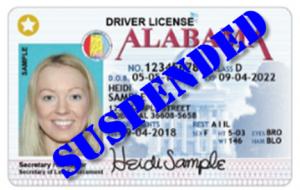
After an arrest, the officer serves a notice of intended suspension. The officer hands the driver a temporary driving permit valid for 30 days. The driver may request an administrative review within 90 days. File within 10 days and the review is done before the suspension takes effect.
Alabama law also calls for an ignition interlock device in many DUI cases. These devices prevent a vehicle from starting if the driver's breath sample registers a BAC of 0.02 or higher. Learn more about Alabama DUI ignition interlock laws.
A first DUI conviction carries penalties including jail time, a fine, and a license suspension. Here is the full list:
The court file is not the whole bill. A first conviction can also void your car insurance. The next premium may jump. And the record stays with you for good.

Penalties escalate with each subsequent offense:
Two more facts can push a sentence up. When a driver's BAC reaches 0.15% or higher, or when a child under 14 is in the vehicle, enhanced "super DUI" penalties may apply. On a first conviction, those circumstances also require an ignition interlock device for one year.
What any one case brings turns on the facts. Prior history counts. The test number counts. The facts of the stop count too.
A DUI arrest in Alabama starts a clock. A driver should ask for an administrative review of the license suspension right away. Filing within 10 days of the notice of intended suspension ensures the review is completed before the suspension takes effect. Wait too long and you could lose the right to drive before a judge hears the case at all.

Polson & Polson, P.C. focuses on DUI defense across Alabama. Mark Polson and his son, Whitney Polson, have built a father-and-son practice dedicated to defending Alabama DUI charges. Whitney Polson co-authored the book on Alabama DUI law.
Call (205) 871-8838 for a free, confidential consultation. For weekends, holidays, or after business hours, use the 24-hour emergency line at (205) 401-3171. Your first call is confidential and carries no obligation. The sooner you speak with a DUI defense attorney, the more options may be available to protect your license and your future.

Alabama's DUI enforcement picture is tracked publicly, and advocacy groups such as MADD publish state-level data on impaired-driving enforcement and legislation.
The pages below go deeper on the parts of Alabama DUI law this page summarizes.
For most drivers age 21 and older, the legal limit is a BAC of 0.08%. Commercial motor vehicle drivers face a lower limit of 0.04%. Drivers under 21 face a zero tolerance threshold of 0.02%. Being below the legal limit does not prevent a DUI charge. Prosecutors may still pursue a conviction based on impairment evidence.
A school bus or day care driver may not drive on the job with a BAC greater than 0.02%. The usual DUI penalties apply. But on a first conviction the state suspends the driver's license for one year, not for the standard 90 days.
A commercial driver's license holder operating a commercial motor vehicle may not have a BAC of 0.04% or greater. A conviction may result in disqualification of commercial driving privileges under federal motor carrier regulations. Standard DUI penalties also apply. The ignition interlock stay does not apply to commercial driving privileges.
Yes. Alabama's impairment-based DUI theory does not require any specific BAC number. If the proof shows that alcohol, drugs, or any impairing substance made you incapable of driving safely, you could be convicted whatever your test said. A BAC between 0.05% and 0.08% may be weighed with other proof of impairment.
Alabama holds underage drivers to a zero tolerance standard. A driver under 21 may face a per se DUI charge at a BAC of 0.02% or more. A BAC above that threshold creates a presumption that the driver was under the influence.
Penalties for an underage DUI conviction may include fines, license suspension, and a mandatory substance abuse program. On a first violation with a BAC between 0.02% and 0.08%, the penalty is a 30-day license suspension in place of the standard DUI penalties. Drivers arrested in north Alabama can read our Huntsville DUI lawyer page for how those cases run locally.


