Alabama DUI Attorneys
The Polson Law Firm
The Polson Law Firm





A second DUI conviction in Alabama carries mandatory jail or community service time and fines of at least $1,100. The driver also loses their license for one year. An ignition interlock device must be installed for two years. These penalties are set by Alabama law and follow the administrative suspension triggered at arrest, which counts toward the revocation. What you do after the arrest can change how the case ends.
What happens after your second DUI depends on several factors. The time between offenses matters. Your blood alcohol level at arrest matters. Whether you requested an administrative hearing on time matters. The sections below break down each consequence so you know what to expect.
Alabama uses a 10-year lookback period to decide whether a new DUI charge is treated as a second offense. Under Alabama law, a prior DUI conviction counts for enhancement purposes if it occurred within 10 years of the date of the current offense.
The prior conviction does not have to come from an Alabama court. Out-of-state DUI convictions count. Convictions under municipal ordinances count. What matters is whether the earlier case resulted in a conviction. This includes nolo contendere pleas that were treated as convictions. The conviction must fall within that 10-year window.
What happens when you get two DUIs inside that 10-year window is a question of how much time and money you now face. A second-offense DUI conviction carries far heavier mandatory minimums than a first offense. For comparison, a first offense carries a fine of not less than $600 nor more than $2,100. A first offense also carries up to one year in jail with no mandatory minimum.

The license hit is much worse on a second offense. At the arrest stage, the officer must serve a notice of intended suspension when the test reads 0.08 percent or more, or the driver refuses. A temporary driving permit valid for 30 days is issued. This administrative suspension is decided separately from the criminal case, and time served on it is credited toward the post-conviction revocation.
Upon conviction, your license is revoked for one year under Alabama law. The court must also require an ignition interlock device on the offender's designated vehicle. This requirement lasts for two years from the date a restricted license is issued.
After a minimum of 45 days of the license revocation or suspension is completed, the offender may present a court order. The offender must show proof of interlock installation. The offender may then obtain an ignition interlock restricted driver license. At that point, the two-year interlock period begins. The remaining revocation period is stayed. The revocation is commuted once the offender successfully completes the full interlock period.
Refusing a chemical test adds consequences. Under Alabama law, the interlock duration is set at one year if the offender refused the prescribed chemical test. Refusal also brings a separate implied consent suspension. The driver must be told before testing that it lasts at least 90 days.
Drivers who do not own a vehicle must still comply. Any defendant without a vehicle or without an interlock installed must pay $75 per month for the entire interlock period under Alabama law. The court may waive this fee if the offender is determined indigent.
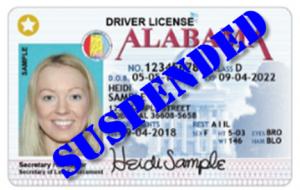
A DUI conviction in Alabama follows you well beyond the courtroom. It helps to know the difference between your criminal record and the lookback window the law uses to count a prior DUI.
For sentencing purposes, Alabama looks back 10 years to count prior DUI convictions. A conviction older than 10 years generally will not trigger second-offense penalties. An exception exists for felony DUI. If the prior was a felony DUI, all subsequent DUI convictions are treated as felonies regardless of when that prior felony conviction occurred.
On the criminal record side, DUI convictions in Alabama are generally not eligible for expungement. The Alabama expungement statute does not reach a conviction for a serious traffic offense, the group that includes DUI. Convictions for DUI typically remain on the criminal record permanently. A lawyer can tell you where you stand.
Insurance costs jump too. A second DUI conviction triggers the need for SR-22 proof of financial responsibility. Expect much higher premiums for years. Alabama lets the filing be released three years after proof was first required, if no new qualifying conviction follows. Insurers may impose surcharges even longer.
When a DUI drops off your record in Alabama for enhancement purposes matters most to a driver facing a second charge.
When a driver is arrested for DUI in Alabama, chemical test results matter. If a chemical test shows 0.08 percent or more blood alcohol, the arresting officer serves a notice of intended suspension. If the driver refuses the test, the officer also serves a notice of intended suspension. The officer acts on behalf of the state and takes the driver's license. A temporary permit valid for 30 days is issued in its place.
Under Alabama law, the driver must request an administrative hearing in writing. The request must be delivered or mailed to the Alabama State Law Enforcement Agency within 10 days of the notice of intended suspension. Missing this deadline waives the right to a hearing and judicial review.
This administrative case is entirely separate from the criminal DUI prosecution. The sole issue at the hearing is whether the driver operated a vehicle with a blood alcohol level at or above 0.08 percent. The hearing also addresses whether the driver refused a test. The hearing does not decide guilt on the criminal charge.
For a second offender, the stakes at this hearing are higher than for a first-time arrest. The administrative suspension runs a year when the record shows one prior alcohol-related contact in the past 10 years. Time served on it then counts toward the revocation that follows a conviction. Acting within the 10-day window is critical.

This section covers what happens after your second DUI in terms of mandatory penalties set by Alabama law.
Jail time. A second conviction carries imprisonment of not more than one year, which may include hard labor. The sentence must include a mandatory minimum of not less than five days in the county or municipal jail. Alternatively, the offender may serve not less than 30 days of community service. The mandatory portion cannot be suspended or probated. How long you stay in jail for a DUI in Alabama depends on these mandatory minimums and factors specific to your case.
Fines. The fine range is not less than $1,100 nor more than $5,100. The court sets the amount within that range. Additional court costs and fees apply, including a $200 ignition interlock fee under Alabama law.
Ignition interlock. A two-year ignition interlock requirement is mandatory, as described in the license section above.
Substance abuse evaluation. The offender must be referred to a court referral officer for evaluation. The offender must complete a DUI or substance abuse court referral program approved by the Administrative Office of Courts under Alabama law. The state will not reissue a driver's license without proof of program completion.
Enhanced penalties for high BAC. If the offender's blood alcohol was 0.15 percent or more, the minimum punishment is doubled under Alabama law, though doubling never extends the interlock period. If the driver was over 21 and a child under age 14 was in the vehicle, the minimum is also doubled under Alabama law.
A second DUI is far more severe than a single offense. Those mandatory minimums limit how far a court can reduce the sentence. Alabama may also suspend the registration on every vehicle a driver convicted twice in 10 years owns. An installed interlock, or undue hardship to a dependent, prevents the registration suspension.

A third DUI conviction within 10 years carries a mandatory minimum of 60 days in jail that cannot be probated or suspended. The license revocation period is three years. That is a steep jump from a second offense. Our page on the penalties for a 3rd DUI in Alabama covers those rules in full.
A second-offense DUI case raises the stakes. It also leaves prosecutors much less room to deal. The statute imposes mandatory minimums that cannot be suspended or probated. So there is little room to bargain for a lighter sentence.
Common defense angles in a second-offense case include:

In some cases, negotiations may result in a reduction to a lesser charge such as reckless driving. However, Alabama law provides that reckless driving is not a lesser included offense under a DUI charge. Any reduction depends on the facts and the prosecutor's discretion.
Pretrial diversion programs are often less open to second offenders than to first-time defendants. Courts and prosecutors treat repeat DUI cases more seriously. The mandatory minimum jail or community service term limits how much relief a plea deal can provide. An experienced Birmingham AL DUI lawyer can look at the evidence and tell you whether to fight the charge or seek a reduction.
A second DUI charge in Alabama triggers a mandatory administrative hearing deadline. You have only 10 days from the notice of intended suspension to request that hearing. Missing this deadline means you waive your right to contest the license suspension.
The mandatory minimum sentence on a second offense means the window to build a defense is narrow. Once you are charged with a second DUI, every day matters. Polson & Polson, P.C. focuses on Alabama DUI defense and handles cases in courts throughout the state, including 2nd offense DUI cases in Birmingham. Contact the firm for a confidential case review and a clear look at your options.
Alabama uses a 10-year lookback period under Alabama law. A prior DUI conviction counts for enhancement if it occurred within 10 years of the date of the current offense. Out-of-state convictions and municipal ordinance violations may also count. If the prior was a felony DUI, the lookback has no time limit.
A second DUI conviction in Alabama is a misdemeanor. It carries up to one year in jail and fines up to $5,100. A DUI becomes a Class C felony on the fourth or subsequent conviction. It also becomes a felony if the offender has a previous felony DUI conviction, under Alabama law.
Alabama's hardship driver license is closed to anyone convicted of DUI. A second offender may instead apply for an ignition interlock restricted driver license once a minimum of 45 days of the license revocation has been served. This requires a court order and proof of interlock installation. The offender must comply with all state requirements. The restricted license allows driving only with a functioning interlock device on the designated vehicle.


