Alabama DUI Attorneys
The Polson Law Firm
The Polson Law Firm




By: Mark Polson
If you are wondering what happens when you get a DUI in Alabama for the first time, the process follows a clear sequence. After a first offense DUI arrest, the officer books you into jail. You post bond to go home. You then have just 10 days from the officer's notice of intended suspension to request an administrative license hearing with the Alabama Law Enforcement Agency (ALEA). This request contests an automatic license suspension. A court date is set for arraignment in municipal or district court. You enter a plea at that hearing. If convicted, first-offense penalties under Alabama law include a fine of not less than $600 nor more than $2,100, with the judge setting the amount in that range. You may face up to one year in jail. Your license will be suspended for 90 days. You must complete a DUI substance abuse course.
What happens for your first DUI offense can feel overwhelming – especially at 2 a.m. after bonding out. A first time DUI charge raises urgent questions about jail, fines, your license, and your future. The same charge goes by many names: a 1st DUI offense, a 1st offense DUI misdemeanor, or just a DUI ticket. This page walks you through every step so you know what to expect and when to act. The most important thing to understand right now is the 10-day deadline to protect your driving privileges.
A first offense for driving under the influence (DUI) in Alabama typically starts with a traffic stop or a checkpoint. The officer observes signs of impairment. The officer asks you to perform field sobriety tests. If the officer develops probable cause, you will be asked to submit to a chemical test. This is usually a breath test. Alabama's implied consent law treats driving on public highways as consent to this test.
Refusing the chemical test has serious consequences. An automatic license suspension of at least 90 days applies. The refusal can also be used as evidence against you at trial under Alabama law regarding chemical test refusals.
After the arrest, the officer transports you to the county jail for booking. You are photographed and fingerprinted. You are held until your blood alcohol level drops below 0.08. Then you post bond. The officer issues a Uniform Traffic Ticket and Complaint. This is the DUI ticket that many first-time arrestees ask about. Under Alabama law, this is the standard form used statewide for traffic charges. Your court date is printed on it.
Once released, the clock starts on two separate tracks. One track is the administrative license process. The other is the criminal case. Both require prompt attention. This is why consulting a first time DUI lawyer quickly matters.

This is the most time-sensitive issue after a first DUI charge. Under Alabama law, when a chemical test shows 0.08 percent or more blood alcohol, the arresting officer serves a notice of intended suspension. The same applies if you refused testing. The officer takes your Alabama driver's license on the spot. You receive a temporary driving permit valid for 30 days.
Under Alabama law, your request for an administrative hearing must reach ALEA, or be mailed and postmarked, within 10 days of that notice. Your request must be in writing. If you miss this deadline, you waive your right to a hearing and to judicial review. The administrative period of suspension then begins 45 days after you receive the notice. It runs 90 days for a driver whose record shows no alcohol or drug related enforcement contact in the past 10 years.
A request for a hearing does not stop the suspension. The hearing itself gives you a chance to challenge whether the officer had grounds for the arrest. You can also challenge whether the test was properly administered.
This administrative process is entirely separate from your criminal case. You can win the administrative hearing and still face criminal charges. You can also lose the hearing and still be acquitted in court. Each track decides the facts independently. But if the DUI charge is dismissed or nolle prossed, or you are acquitted, ALEA must rescind the administrative suspension and remove it from your driving record. Commercial license holders are the exception.
This deadline is the primary reason to contact an attorney immediately after a first offense DUI arrest. Missing the 10-day window closes the hearing route before the suspension begins. A separate administrative review can still be requested in writing within 90 days of the notice. A review requested after the tenth day is not decided before the suspension starts.

Your first court appearance is the arraignment. The judge reads the DUI charge. The judge confirms you understand the accusation. The judge asks you to enter a plea. In most first offense DUI Alabama cases, the initial plea is not guilty. This preserves your right to review the evidence. You can examine dashcam footage, the officer's report, and chemical test records before making any decisions.
At arraignment, the judge may also address bond conditions. These can include restrictions on alcohol use. In some cases, they may include installation of an ignition interlock device. Alabama law allows this as a condition of bond.
Depending on where the arrest occurred, your case may be heard in municipal court or district court. Under Alabama law, district courts have jurisdiction over misdemeanor prosecutions. The exception is municipalities that operate their own courts. A first offense DUI misdemeanor is typically resolved at one of these two levels.
After arraignment, the case moves toward resolution. That resolution may involve trial, a negotiated plea, or in limited circumstances a pretrial diversion program. The availability depends on your jurisdiction. The path depends on the specific facts and the court involved. No particular outcome can be guaranteed.
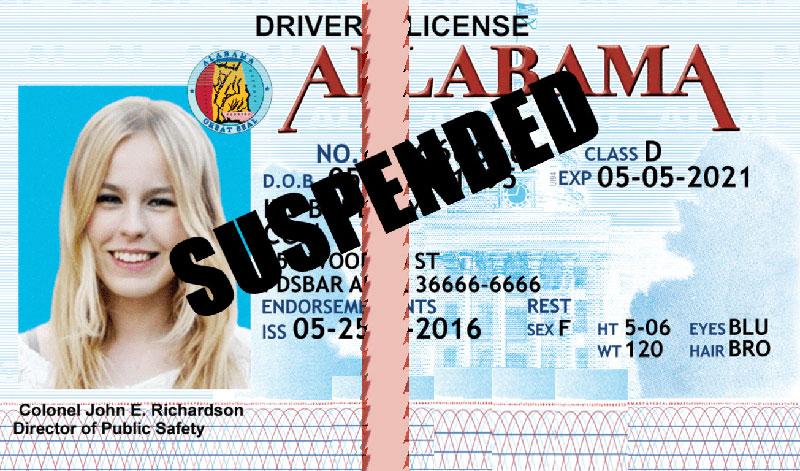
Under Alabama law, the typical punishment for DUI on a first conviction comes from the ranges the statute sets:
How much jail time for DUI depends on the circumstances. The statute allows up to one year. But the sentencing judge has discretion to suspend jail time and impose probation instead. The maximum is the ceiling, not the default.
Certain first-offense circumstances trigger a mandatory one-year ignition interlock requirement, and two of them also double the minimum sentence. The one-year interlock replaces the standard 90-day option. Under Alabama law, interlock is mandatory if:
In these aggravated situations, the 90-day license suspension still applies. After a minimum of 45 days, the mandated one-year interlock period can begin. That takes a court order, an interlock restricted driver license, and proof of installation. Anyone ordered to use interlock, or electing it, also pays a $200 court fee.
A high BAC raises the sentence as well. When the driver had 0.15 percent or more alcohol in the blood, the court must impose at least double the minimum punishment. If the offense is a misdemeanor, that minimum becomes imprisonment for one year, all of which the court may suspend. The same doubling applies when a driver over 21 had a child under 14 in the vehicle.
For a detailed breakdown of how penalties increase with BAC level and prior offenses, see our guide to DUI penalties in Alabama. For a broader overview of the statutes that govern impaired driving charges, visit our Alabama DUI laws guide.

Birmingham DUI lawyer Whitney Polson says, "A convicted drunk driver must satisfy all sentencing conditions. The driver must pay all fines and surcharges ordered by the judge. Probation is a common part of Alabama DUI sentences. The probation departments provide oversight to assure compliance with Alabama DUI laws."
Since the statute allows up to one year of jail, probation serves as an alternative to incarceration. The sentencing judge has discretion to suspend the jail sentence. The judge may place the offender on probation instead. Under Alabama law, probation for a misdemeanor conviction may last up to two years, and in DUI cases that cap is extended until all ignition interlock requirements are complete.
Typical probation conditions for a first-offense DUI may include:
The court referral program evaluation determines what level of substance abuse education or treatment the offender needs. Classes can range from a short educational course to a longer treatment program. The evaluation results determine the level.
If an offender violates probation terms, the court can revoke probation. Violations include missing a payment, failing to complete DUI school, or picking up a new charge. The original suspended jail sentence can then be imposed. Taking probation conditions seriously protects against that outcome.
A first time DUI lawyer handles the details that most people do not know exist after an arrest. Most first time DUI offenders have never been inside a criminal courtroom. First time offenders rarely know which deadline comes first. The work begins immediately. It covers both the administrative and criminal sides of the case.

On the administrative side, your attorney files the 10-day hearing request with ALEA. This protects your driving privileges by meeting the deadline.
On the criminal side, defense work typically includes:
Every case is different. The strength of the evidence matters. The circumstances of the stop matter. The accuracy of the testing matters. All shape the available defense strategies. A DUI conviction can have lasting consequences on your criminal record. No attorney can guarantee a specific result. But thorough preparation gives you the best position to make informed decisions about your case.
The courts in Alabama do not allow do-overs. You get one chance to defend your first time DUI charge. The 10-day administrative license deadline starts running when the officer serves your notice of intended suspension.
A free consultation with Polson & Polson, P.C. covers reviewing your DUI ticket and arrest circumstances. We explain the 10-day ALEA deadline if it has not yet passed. We also outline the next steps in your case. Our firm focuses on DUI and criminal defense across Alabama. We understand how municipal and district courts handle first-offense cases.
Call 205-871-8838 today. The sooner you act, the more options may be available. You can protect your license and your future.

After a first-offense DUI arrest, the driver is booked into jail and held until their BAC drops below 0.08. The driver then has 10 days from the officer's notice of intended suspension to request an administrative license hearing with ALEA. A court date for arraignment is set on the DUI ticket. The criminal case and the administrative license process run on separate tracks.
You have 10 days from the date of the notice of intended suspension to get a written request for an administrative hearing to ALEA, by delivery or by postmarked mail. Missing this deadline waives your right to a hearing and to judicial review. The suspension then takes effect 45 days after the notice.
A first-offense DUI in Alabama is a misdemeanor. A first offense DUI misdemeanor carries up to one year in jail and a fine of not less than $600 nor more than $2,100. DUI becomes a felony only on a fourth or subsequent conviction, counting prior convictions from the past 10 years. It also becomes a felony if the driver has a prior felony DUI conviction, whenever that conviction occurred.
The maximum jail sentence for a first DUI conviction is one year. However, the sentencing judge has discretion to suspend the jail time and impose probation instead. The actual sentence depends on the facts of the case. If the driver had 0.15 percent or more alcohol in the blood, the minimum punishment doubles to one year, though the court may suspend all of it.
Alabama law is very limited regarding DUI expungement. A DUI conviction cannot be expunged, because Alabama's expungement law excludes convictions for serious traffic offenses, and DUI is one. This is why the outcome of the original case matters so much. If the charge is dismissed with prejudice, no billed, nolle prossed without conditions, or you are found not guilty, you may petition to expunge the record once 90 days have passed. Consult a licensed Alabama attorney about your specific situation.


