Alabama DUI Attorneys
The Polson Law Firm
The Polson Law Firm




An Alabama DUI arrest can be unnerving. It can upset your job, your family, and your ability to drive. Many people facing a DUI in Alabama worry about a suspended license, rising insurance costs, and jail time. Others want to know: is a DUI a felony in Alabama? Most also want to know what to expect at a DUI hearing.
These concerns are valid. The answers depend on your specific situation. Below, you will learn what a DUI hearing involves in Alabama. You will also learn the legal consequences and possible sentences you face under state law. Finally, you will see how a defense attorney handles DUI charges, from the first case review to getting ready for trial.

After a DUI arrest in Alabama, a defendant typically faces two separate tracks. One is a criminal court proceeding. The other is an administrative license hearing before the Alabama Law Enforcement Agency (ALEA).
ALEA can suspend your driving privileges based on the arrest itself. This suspension is separate from any criminal conviction. Under Alabama law, if you refused a chemical test, ALEA's secretary will suspend your driving privilege upon receiving the officer's sworn report. You have the right to request a hearing. Your written request must reach ALEA's Driver License Division in Montgomery, or be mailed and postmarked, within 10 days of the notice of intended suspension. Missing those 10 days waives both the hearing and judicial review. A request does not stay the suspension, and the suspension itself takes effect 45 days after you receive the notice.
At the administrative DUI hearing, the scope is narrow. ALEA determines three things. First, whether the officer had reasonable grounds to believe you violated the DUI statute. Second, whether you were placed under arrest. Third, whether you refused the chemical test.
The criminal side begins with an arraignment. You appear before a judge, hear the formal charge, and enter a plea. The court sets bond conditions. These may include installation of an ignition interlock device. Pretrial hearings follow. Your attorney can file motions to suppress evidence. You can challenge the legality of the traffic stop. You can also contest the reliability of breath or blood test results.
A defense attorney prepares for each DUI hearing by reviewing the arrest report. The attorney also reviews dashcam and bodycam footage. The attorney reviews breath or blood test procedures and officer certifications. These details often decide whether evidence can be challenged before trial.

Alabama's DUI statute sets escalating penalties based on the number of convictions within a ten-year period. A prior conviction counts if it occurred within ten years of the current offense, and a previous felony DUI counts no matter how old it is. Every conviction also requires referral to a court referral officer and completion of an approved DUI or substance abuse program before ALEA will reissue your license. Understanding the minimum sentence for each tier helps you grasp what you face.
A first conviction carries up to one year in the county or municipal jail. The fine is not less than $600 nor more than $2,100. You may receive one or both penalties. ALEA suspends driving privileges for 90 days. The suspension may be stayed if you install an approved ignition interlock device for 90 days. Aggravating factors trigger a mandatory one-year ignition interlock requirement. These factors include a BAC of 0.15 or higher, which also doubles the minimum punishment. They also include a child under 14 in the vehicle, which doubles the minimum punishment when the driver is over 21. Refusal of a chemical test counts too. So does injury to another person.
A second conviction within ten years carries a fine of not less than $1,100 nor more than $5,100. You also face imprisonment, which may include hard labor, in the county or municipal jail for up to one year. The statute requires a mandatory minimum of not less than five days in the county or municipal jail. Alternatively, you may serve not less than 30 days of community service. This mandatory sentence cannot be suspended or probated. ALEA revokes driving privileges for one year. You must use an ignition interlock device for two years.
A third DUI conviction within ten years carries a fine of not less than $2,100 nor more than $10,100. You also face imprisonment, which may include hard labor, in the county or municipal jail for not less than 60 days nor more than one year. A minimum of 60 days must be served in the county or municipal jail. Those 60 days cannot be probated or suspended. ALEA revokes driving privileges for three years. You must maintain an ignition interlock device for three years.
A fourth or subsequent DUI conviction is a Class C felony. So is any DUI conviction by a person who has a previous felony DUI. Under Alabama law, a Class C felony carries a sentence of not less than one year and one day. The sentence is also not more than 10 years. The fine is not less than $4,100 nor more than $10,100. There is a mandatory minimum of 10 days in the county jail. A term of one year and one day is served in the county jail rather than state prison, and a term of up to three years may also be served there. ALEA revokes driving privileges for five years. You must maintain an ignition interlock device for four years.
The remainder of the sentence beyond the mandatory minimum may be suspended or probated, but only if you enroll in and complete a state-certified chemical dependency program as a condition of probation. Alabama's habitual felony offender law does not apply to a felony DUI conviction.
When a DUI conviction suspends or revokes your license, Alabama restores neither the license nor your vehicle registrations until you file and maintain proof of financial responsibility – the SR-22 filing. That proof must stay in place for at least three years. This raises premiums significantly. A second DUI within ten years also suspends the registration on every vehicle you own for as long as your license is suspended, unless a working ignition interlock device is installed or the suspension would create undue hardship for someone who depends on the vehicle. Because a Class C felony is punishable by more than one year, a felony DUI triggers the federal firearm ban on people convicted of such crimes. Commercial driver's license (CDL) holders face disqualification under federal motor carrier regulations. Non-citizens may face immigration consequences, including deportation or inadmissibility. These added effects vary with the facts. Talk to an attorney about your own situation.
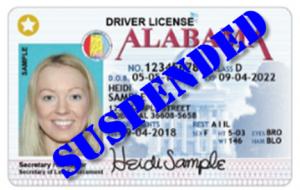
Handling DUI charges well takes a close look at every stage of the stop. That means the first contact with police, the tests, and the arrest.
The process begins with an initial case review. The defense attorney examines the arrest report. The attorney also reviews dashcam and bodycam footage. The attorney reviews breath or blood test results and the arresting officer's training certifications. Each one can show a mistake in procedure or a violation of your rights.
Next, the attorney looks at the traffic stop itself. Under the Fourth Amendment, an officer needs reasonable suspicion of a traffic violation or criminal activity to pull a driver over. If the stop lacked legal justification, all evidence gathered afterward may be suppressed.
The arrest gets its own review. Officers are trained to give field sobriety tests under the NHTSA Standardized Field Sobriety Test protocols, which are training standards rather than Alabama statutes. Deviations from these protocols can undermine the officer's probable cause determination. Examples include testing on uneven or slippery ground. Others include giving the wrong instructions. Still others include not allowing for the driver's age, weight, or medical conditions. These errors can undermine the test results.
Breath and blood test evidence gets close attention. For breath tests, the defense examines Intoxilyzer calibration and maintenance records. The defense also checks whether the officer observed the driver for the required waiting period before testing. The defense determines whether mouth alcohol from recent belching or medical conditions could have produced an artificially high reading. For blood tests, the chain of custody, lab accreditation, and proper storage of the sample are examined.
When procedural violations are found, the attorney files motions to suppress the affected evidence. In some cases, plea negotiations may result in a reduction to reckless driving. This avoids certain license consequences. When suppression and negotiation do not resolve the case, thorough trial preparation follows.
The answer is not necessarily. Some Alabama criminal defense lawyers focus on white collar crimes like Medicare fraud. Others only accept felony cases like murder, armed robbery, and sex crimes. Our Alabama DUI lawyers mostly handle alcohol and drug crimes. They handle these cases day in and day out.
Drunk driving defense is one part of Alabama criminal law. It leans more on serious driving crimes. It also focuses on the science behind breath alcohol testing. Field sobriety test reliability matters too. So does whether a police pullover or DUI checkpoint arrest and warrantless search are constitutional. Polson & Polson, P.C. in Birmingham handles this kind of DUI defense work.
Mark Polson and Whitney Polson handle felonies or misdemeanors of any type in Alabama. They have focused their law practice on alcohol and drug offenses. Polson & Polson, P.C. handles DUI in Alabama. The firm also handles vehicular homicide and serious injury by vehicle. The firm handles DUI with a child in the car. The firm handles marijuana possession charges (misdemeanor or felony). The firm also handles domestic violence accusations. These are the cases Polson & Polson, P.C. handles most often. The firm works out of its Birmingham, Alabama offices.

A conviction after a second DUI offense results in one year of license revocation. This applies if the earlier conviction occurred within ten years of the new offense. You cannot drive during that year unless the court orders an ignition interlock restricted license. ALEA issues that license only after at least 45 days of the revocation and proof the device is installed.
Our clients do not want a suspended license on their Alabama driving record. That is why we draw on nearly fifty years of combined practice when we build a DUI defense. We work to avoid this type of harsh Alabama driver's license suspension. License loss is just one of many Alabama DUI penalties. Our Alabama DUI attorneys look for another way through your case.
Suspension and revocation periods vary by offense tier under Alabama law. A first offense conviction results in a 90-day suspension. This may be stayed with ignition interlock installation. A second conviction triggers a one-year revocation with a two-year ignition interlock requirement. A third conviction triggers a three-year revocation with a three-year ignition interlock requirement. A fourth or subsequent conviction, or any conviction by a person with a previous felony DUI, is a Class C felony. It results in a five-year revocation and a four-year ignition interlock period.
These criminal conviction suspensions are separate from the administrative suspension that ALEA may impose at the time of arrest. Under Alabama law, refusing a chemical test triggers its own suspension of at least 90 days. The period of suspension depends on your record: 90 days with no prior alcohol or drug-related enforcement contact in the preceding 10 years, one year with one, three years with two, and five years with three or more. If you were involved in a crash causing death or serious physical injury, a two-year suspension for refusal applies. The administrative and criminal suspensions can run concurrently or consecutively depending on the circumstances.
After completing a minimum portion of the revocation period, a court order and proof of ignition interlock installation may allow the remaining suspension to be stayed. For first and second offenses, the minimum is 45 days. For a third offense, the minimum is 60 days. For a fourth or subsequent felony offense, the minimum is one year. The ignition interlock device is not optional for repeat offenders. ALEA will not reissue a license until the court confirms the interlock requirement has been satisfied.

Several kinds of defense may apply to a DUI charge in Alabama. Whether any of them fits your case depends on the specific facts.
Challenging the traffic stop. If the officer lacked reasonable suspicion to initiate the stop, the defense may move to suppress all evidence obtained afterward. Common issues include stops based on anonymous tips without corroboration or minor lane deviations that do not constitute a traffic violation.
Challenging field sobriety tests. Officers are trained to follow NHTSA protocols when administering standardized field sobriety tests, though no Alabama statute requires them. Errors in instruction can undermine the results. Testing on uneven or slippery surfaces can undermine the results. Failing to account for the driver's age, weight, or medical conditions can also undermine the results.
Challenging breath test results. Intoxilyzer devices require regular calibration and maintenance. Defense attorneys examine calibration logs. They check the officer's certification to operate the device. They determine whether the required observation period was followed before testing. Mouth alcohol from gastroesophageal reflux or recent belching can produce falsely elevated readings.
Challenging blood test results. Blood draws must follow proper procedures. Issues with chain of custody, lab accreditation, improper storage, or contamination of the sample can render the results unreliable.
Rising BAC defense. Alcohol absorption continues after a person stops drinking. A driver's BAC at the time of testing may have been higher than it was at the time of driving.
Medical conditions that mimic intoxication. Conditions such as gastroesophageal reflux, diabetes, and ketogenic diets can produce symptoms or chemical readings that mimic alcohol impairment.
Miranda and statement suppression. Statements made during custodial interrogation without proper Miranda warnings may be excluded from evidence.
Whether any of these defenses applies depends on the specific facts of your case. A close look at your arrest details and case file matters.
Time matters after a DUI arrest in Alabama. The deadline to request your ALEA administrative license hearing is short. Missing it means losing your chance to contest the suspension. An attorney can review the traffic stop, the arrest, and the testing in your case. That review can turn up defenses.
Polson & Polson, P.C. offers a free case review to anyone facing DUI charges in Alabama. The firm handles DUI defense statewide from its Birmingham office.
To learn how we can help fight your DUI case, please contact us today for a FREE case analysis. Call 205-871-8838 or toll free at 1-844-776-5766.

Two types of DUI hearings exist. The administrative hearing before ALEA determines whether your license suspension stands. ALEA examines whether the officer had reasonable grounds, whether you were arrested, and whether you refused a chemical test. The criminal hearing involves arraignment, pretrial motions, and potentially a trial. At trial, the prosecution must prove beyond a reasonable doubt that you violated Alabama's DUI statute. Your attorney can challenge evidence at both hearings.
You have 10 days. Your written request must be received by ALEA's Driver License Division, or be mailed and postmarked, within 10 days of the notice of intended suspension. Failing to ask within those 10 days waives both the administrative hearing and judicial review. A request does not stay the suspension, so contact an attorney promptly after your arrest.
The minimum sentence depends on the offense tier. A first offense carries a fine of not less than $600 nor more than $2,100, up to one year in the county or municipal jail, or both. A second offense requires a mandatory minimum of five days in jail or 30 days of community service. That mandatory sentence cannot be suspended or probated. A third offense carries a mandatory minimum of 60 days in jail that cannot be probated or suspended. A fourth or subsequent offense is a Class C felony with a mandatory minimum of 10 days in county jail. It carries a sentence of not less than one year and one day nor more than 10 years.
Yes. A fourth or subsequent DUI conviction is a Class C felony. This also applies if the defendant has a prior felony DUI. Under Alabama law, a felony DUI carries a sentence of not less than one year and one day. The sentence is not more than 10 years. It may include hard labor for the county or state, but a term of one year and one day is served in the county jail rather than state prison.
A DUI becomes a Class C felony upon a fourth conviction. It also becomes a felony if the person has a previous felony DUI conviction, under Alabama law. Prior convictions count toward the total when they fall within ten years of the current offense, and a previous felony DUI counts no matter how old it is. A felony DUI carries significantly harsher penalties, including a fine of not less than $4,100 nor more than $10,100, imprisonment of one year and one day to 10 years, and a five-year license revocation.


