Alabama DUI Attorneys
The Polson Law Firm
The Polson Law Firm





Almost every drug possession charge in Alabama is a felony. That single fact changes everything for anyone arrested on a first drug charge in the Birmingham area. The first days after arrest shape your entire case. They affect diversion eligibility, bond conditions, and how prosecutors view your file.
Polson & Polson, P.C. is a Birmingham criminal defense practice. We handle drug charges in Jefferson County District Court, Jefferson County Circuit Court, and Birmingham Municipal Court. The decisions you make right now matter more than anything that happens later in the process.
Alabama treats almost every drug offense as a felony. That fact alone surprises most clients. The state divides drug possession into several statutes. The specific drug, the amount, and your prior record all change the charge you face.
What counts as a controlled or dangerous drug in Alabama. Alabama follows the federal five-schedule classification system. Schedule I includes substances with high abuse potential and no accepted medical use. Heroin, LSD, and ecstasy fall here.
Schedule II covers drugs with accepted medical uses but high abuse potential. Cocaine, methamphetamine, fentanyl, and oxycodone are in this category. Schedules III through V contain substances with progressively lower abuse potential. They include certain prescription medications.
"Controlled substance" and "dangerous drug" refer to the same family of offenses under Title 13A, Chapter 12. Alabama has no separate statute for possession of dangerous drugs. All these charges flow from the controlled substance schedules.
Possession of a controlled substance (Schedules I through V). Alabama law provides that unlawful possession of a controlled substance in Schedules I through V is a Class D felony. Cocaine, methamphetamine, heroin, and opioid prescription drugs like oxycodone fall here.
Marijuana – second degree. Personal-use possession of marijuana is a Class A misdemeanor. A misdemeanor conviction stays on your record until a court expunges it, and that petition cannot be filed until three years after the conviction. Treat it seriously.
Marijuana – first degree. Possessing marijuana for other than personal use is first-degree possession, and that version is a Class C felony. Personal-use possession after a prior marijuana conviction is also first degree, and that version is a Class D felony.
Possession of drug paraphernalia. Paraphernalia charges accompany a large share of drug arrests in Jefferson County. Using paraphernalia, or possessing it with intent to use, is a Class A misdemeanor. Delivering paraphernalia to someone under 18 who is at least three years younger is a Class B felony.
Possession with intent to distribute. Alabama law provides that unlawful distribution of controlled substances – or possession with intent to distribute – is a Class B felony. Prosecutors infer intent from the quantity seized. They also look at packaging materials, digital scales, large amounts of cash, and communications on a defendant's phone. More than eight grams but less than 28 grams of cocaine or methamphetamine triggers a Class B felony charge. The charge is for possession with intent to distribute.
Trafficking. Once weight thresholds are reached, the case is no longer a possession case. For example, more than one kilo of marijuana or 28 grams of cocaine qualifies as trafficking. Drug trafficking carries mandatory minimum prison time and substantial fines. If you are charged with trafficking, the defense strategy differs completely. It must start immediately.
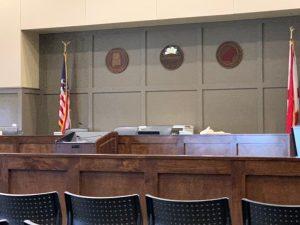
What are the penalties for a first drug charge in Alabama? The answer depends on the substance, the amount, and your prior criminal record. Alabama's sentencing structure sets ranges the court applies based on the facts of each case.
Misdemeanor marijuana possession for personal use. A Class A misdemeanor carries a maximum sentence of up to one year in the county jail. The court has discretion on the actual sentence. Probation may be available.
Felony possession of a controlled substance. A Class D felony carries a definite term of imprisonment of not less than one year and one day and not more than five years. The court may impose a fine of up to $7,500.
When the sentence imposed is not more than 15 years, the court may order confinement not exceeding three years. The court may suspend the remainder and place the defendant on probation.
Possession with intent to distribute. A Class B felony carries a prison term of not less than two years and not more than 20 years. The court may impose a fine of up to $30,000.
Trafficking. Trafficking charges carry mandatory minimum prison sentences and mandatory fines. These vary depending on the type of substance and the quantity. Trafficking in cocaine involving 28 grams or more but less than 500 grams requires a mandatory minimum of three calendar years and a fine of $50,000. Higher quantities carry longer mandatory minimums, up to life imprisonment. Possessing a firearm during a trafficking offense adds five calendar years the court cannot suspend, plus a $25,000 fine.
Possession penalties are serious at every level. An experienced defense attorney can review the specific facts of your case. They can explain the sentencing exposure you face.
A first drug charge is often the best opportunity to avoid a permanent conviction. If you have never been arrested before, you may qualify for diversion or alternative sentencing. These programs can end in a dismissal you may ask the court to expunge a year later.
At your first appearance in Jefferson County District Court, the judge will set bond conditions. These may include drug testing and travel restrictions. First-offender status affects your eligibility for the Jefferson County Pretrial Diversion Program and Drug Court. Both programs can lead to a case dismissal.
A first drug charge also creates consequences beyond the courtroom. A felony arrest can appear on background checks. It can trigger professional licensing reviews. These collateral effects start before a conviction. Sometimes they start before the first court date.
The diversion programs described below offer a path to dismissal for many first-time defendants. If you face your first drug charge, speak with an attorney before your next court date. You should understand every option available.
Birmingham drug cases generally start with a Birmingham Police Department or Jefferson County Sheriff stop. An arrest or citation follows, then booking at the Jefferson County Jail. From there the path depends on whether the case is a misdemeanor or a felony.
A misdemeanor possession case typically begins in Birmingham Municipal Court or in district court. A felony possession case is filed by the Jefferson County District Attorney's Office. It proceeds to a preliminary hearing in Jefferson County District Court. Then it is bound over to Jefferson County Circuit Court for indictment, arraignment, and trial.
The very early decisions are critical. These include bond. They also include whether to talk to police and what to say on social media. How you handle a probation or pretrial drug screen matters too. Calling an attorney before the first court date can make a huge difference in your case's outcome.
No two Birmingham drug cases are identical. Most defenses fall into a small number of categories. The right one depends on the police report, the lab report, and the chain of custody. A defendant usually cannot access these materials without a lawyer.
Unlawful stop or search. The Fourth Amendment is the defense lawyer's strongest tool in drug cases. If the traffic stop lacked reasonable suspicion, the evidence may be suppressed. If the search of the car exceeded what consent permitted, suppression may apply. If a warrant was defective on its face, suppression is warranted. No illegal drugs in evidence usually means no case.
Lack of knowing possession. Alabama requires the state to prove you knowingly possessed the substance. Drugs found in a shared apartment, a borrowed car, or a friend's bag are not automatically yours under the law.
Constructive versus actual possession disputes. When multiple people are in the same vehicle or home, prosecutors rely on constructive possession. They argue the defendant had knowledge of and control over the substance even without physical contact. In many Jefferson County cases, defense counsel challenges whether the state can tie the drugs to one specific person. Skilled cross-examination can dismantle weak constructive possession theories. This is especially true when the substance was found in a common area accessible to several people.
Chain of custody and lab challenges. The Alabama Department of Forensic Sciences handles drug testing for most cases. Defense counsel typically reviews whether evidence bags maintained their seals. They check whether the substance was properly weighed and tested. They verify whether the lab followed its own protocols. Mistakes in chain of custody or identification can undermine the state's case.
Valid prescription defenses. If you possessed a Schedule II through V controlled substance under a valid prescription, that is a complete defense. However, you must present the prescription evidence correctly. The substance must match what the prescription covers.
Medical amnesty for an overdose call. Alabama bars prosecution for a misdemeanor controlled substance offense when law enforcement learned of it only because you were seeking medical help for someone else. You must have acted in good faith, believed you were the first to call, used your own name, and stayed with the person until help arrived.
Entrapment in controlled-buy cases. Many street-level cases rest on a confidential informant. Their credibility, criminal history, and any deal they made with the state are fair game at trial. In controlled-buy operations, defense counsel examines whether law enforcement induced the defendant to commit a crime. The defendant must not have been otherwise predisposed to commit it.
For many first-time and non-violent drug clients in Jefferson County, the best outcome is not a trial. It is admission into a program that ends with a dismissal. Birmingham has more diversion options than most Alabama cities. A knowledgeable defense lawyer can explain which program fits your case.
The Jefferson County District Attorney's Pretrial Diversion Program allows certain non-violent defendants to complete supervision, drug testing, treatment, and community service. In exchange, the charge is dismissed and, in many cases, expunged. Alabama's diversion statute lets a person charged with a drug offense apply, but it excludes charges of selling a controlled substance, manufacturing in the first degree, and trafficking.
Drug Court is administered through the District Court of Jefferson County. Admission requires the consent of the district attorney and the court under a written agreement, and the program runs on regular testing and treatment. A pending distribution, manufacturing, or trafficking charge makes a defendant ineligible. On successful completion the judge disposes of the case, which can include dismissing the charges.
Mental Health Court and Veteran's Court offer similar deferred-prosecution structures. These programs serve clients whose underlying issues fit those tracks. See the Jeffco Bessemer DA specialty courts page.
Not every client should choose diversion. These programs are demanding. They cost money. A failed program means the original conviction sticks. The right answer depends on the strength of the state's case, your record, your work and family obligations, and whether you actually need a treatment program. That conversation is one of the most important your lawyer will have with you.
The practical difference between completing diversion and accepting a plea is enormous. A defendant who finishes diversion walks away with a dismissed charge. They are often eligible for expungement. This means the arrest may eventually be removed from public records. A defendant who pleads guilty to a felony drug charge keeps that conviction unless a pardon later opens the door to expungement. A trafficking conviction also costs the right to vote. Any felony conviction bars firearm possession for five years under Alabama law. It can limit employment and housing options for years. For anyone facing a first drug charge, diversion is often the single most important option to explore with counsel.

Jail time is rarely the worst part of a drug possession conviction in Alabama. The downstream consequences are the part that lasts.
A drug trafficking conviction costs you the right to vote; possession convictions are not on Alabama's disqualifying list. A felony conviction bars firearm possession for five years under state law, and federal law bars it for anyone convicted of a crime punishable by more than a year. It can block eligibility for many professional licenses. It can restrict access to housing in many private and public communities.
If you hold a CDL, a nursing license, or any state-issued professional license, a conviction triggers a separate licensing-board process. This process often runs faster than the criminal case itself. Attorney Whitney Polson is familiar with how to present your case to these licensing boards.
Immigration consequences are particularly severe. Even a deferred plea to a controlled substance offense can result in deportation or denial of naturalization for non-citizens.
In a Birmingham drug case, the goal is rarely just "the shortest sentence." The real goal is the lightest record possible. You want to keep your job, your license, your housing, and your future.
When you hire experienced Birmingham drug possession attorney Whitney Polson, he will take the following actions:
File a formal entry of appearance. Notify the prosecutor that all communication goes through counsel.
Request the police report, body-cam and dash-cam footage, the search warrant and affidavit, and the Alabama Department of Forensic Sciences lab report.
Preserve evidence at the scene. This includes vehicle dash-cam, surveillance video from nearby businesses, and witness contact information before memories fade.
Evaluate Fourth Amendment suppression issues. Draft a motion to suppress where the facts support it.
Assess your eligibility for Pretrial Diversion, Drug Court, Mental Health Court, or Veterans Court.
Prepare you for every court appearance. This includes what to wear, what to say, and what not to say.
If you have already been to one court date without an attorney, you have not blown your case. However, you should get representation in place before the next one.
Polson & Polson, P.C. focuses on criminal defense in Alabama. The practice centers on drug charges, DUI, and related offenses. Attorney Whitney Polson appears regularly in Birmingham Municipal Court, Jefferson County District Court, and Jefferson County Circuit Court.
That familiarity with local courts, prosecutors, and diversion coordinators allows thorough preparation at every stage of a case. Good lawyers for drug charges understand that preparation is key. They review every piece of evidence. They identify every viable defense. They know how each court handles drug cases. This preparation is what separates adequate representation from effective representation.
We also understand that you are not just a case file. You are a person who needs both a legal strategy and the dignity of being heard.
If you have been arrested or charged with drug possession anywhere in the Birmingham metro area, call before your first court date. The area includes Jefferson County, Shelby County, Bessemer Division, Homewood, Hoover, Vestavia Hills, Mountain Brook, and Trussville.
Whether you are searching for lawyers near me for drug charges or facing a first drug charge, the initial consultation is confidential. There is no obligation. Call Polson & Polson, P.C. at (205) 871-8838.
The sooner we get involved, the more options we have to protect your record and your future. Every case is different. Results depend on the specific facts and circumstances involved.
If this is your first felony charge, the sentencing range is only part of the picture. Read about a first-time offender facing a felony drug charge in Alabama and the diversion routes that may apply.
Yes, in most cases. Possession of any controlled substance in Schedules I through V is a Class D felony. The exception is personal-use marijuana possession, which is a Class A misdemeanor. Even a misdemeanor stays on your record until a court expunges it, so any drug charge deserves serious attention.
A Class D felony carries one year and one day to five years in prison and a fine of up to $7,500. A Class B felony – such as possession with intent to distribute – carries two to twenty years and a fine of up to $30,000. Trafficking offenses carry mandatory minimum prison terms and mandatory fines. The court sets the actual sentence within these ranges based on the facts and the defendant's record.
Many first-time, non-violent defendants qualify for the Jefferson County Pretrial Diversion Program or Drug Court. Successful completion of these programs may result in dismissal and, in some cases, expungement. Eligibility depends on the charge, your criminal history, and other factors the diversion coordinator evaluates. By statute, charges of selling a controlled substance, first-degree manufacturing, and trafficking are excluded from both programs.
In Alabama, no separate "dangerous drug" statute exists. What many people call a dangerous drugs charge refers to the same controlled substance offenses under Title 13A, Chapter 12. All drug charges flow from the five-schedule classification system Alabama follows. The term "dangerous drug" is not a legal distinction in this state.
Look for an attorney who focuses on criminal defense and handles drug cases regularly in Jefferson County courts. Ask about their familiarity with local prosecutors, diversion programs, and Drug Court. A free initial consultation gives you the chance to evaluate whether the attorney understands your situation and can explain your options clearly.


